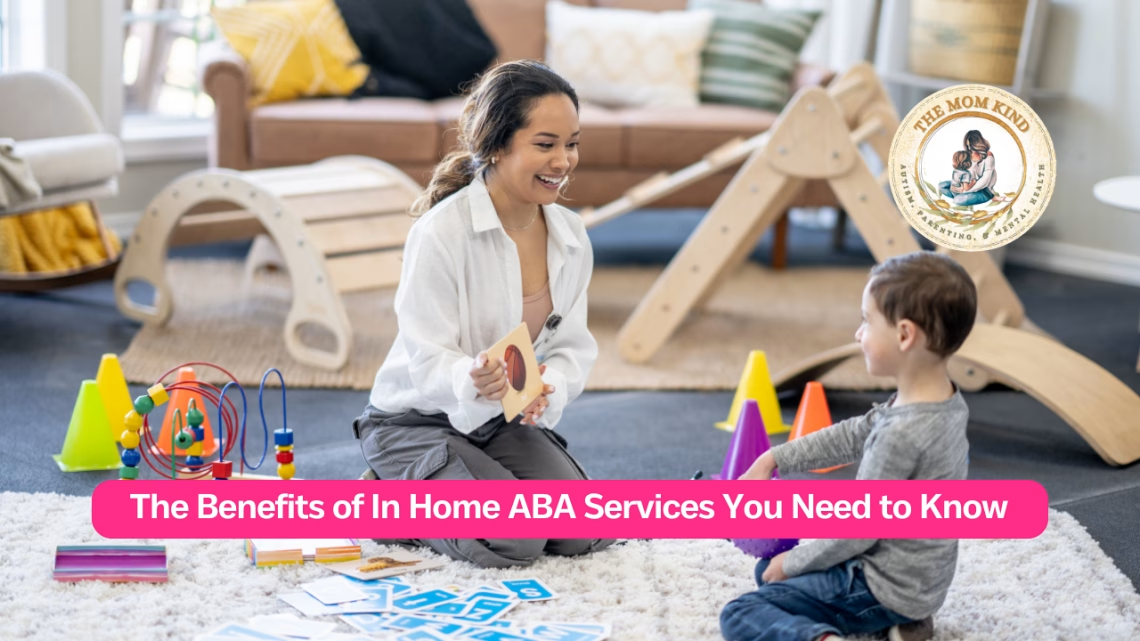
Families will usually look for effective ways of ensuring that their child learns and develops skills in a familiar setting. Among the alternatives that are increasingly being preferred is in home ABA services. This is a customized service where the learning and behavior support will be provided in the child’s natural setting. Rather than having to travel to a clinic, the professionals will come to the home, thus allowing the lessons to seamlessly integrate with daily routines.
This not only helps the child with autism develop life skills but also allows parents to be actively involved in the progress of their child. The following is a detailed explanation of how Home-Based ABA Services can benefit children and their families.
In home ABA services: Learning Occurs Where Life Occurs
Children learn effectively when new skills are applied in their natural environments. In a clinic, skills can be learned by example or simulation. At home, the same skills are automatically associated with everyday activities.
For instance:
- Following directions can be practiced during meal times
- Cleaning up can be demonstrated with real toys
- Communication can be practiced with family members
- Everyday activities are associated with learning
Since in home ABA therapy takes place in the child’s natural environment, learning becomes relevant rather than abstract. Children recognize the significance of a skill since they apply it immediately.
Faster Skill Generalization
One of the largest difficulties in structured learning programs is “generalization,” which is the application of a skill in different contexts. A child may learn a skill perfectly in therapy but have difficulty in other contexts.
In home ABA services eliminate this difficulty by training the skills in the same context in which they are to be applied. Since the skills are trained in the living room, kitchen, or bedroom, the children automatically generalize the skills to other tasks.
This results in:
- Increased retention
- Increased consistency of behavior
- Increased independence
- Decreased frustration
Children do not have to be trained again and again in different contexts. They learn a skill once and perform it everywhere in the house.
Active Parent Participation
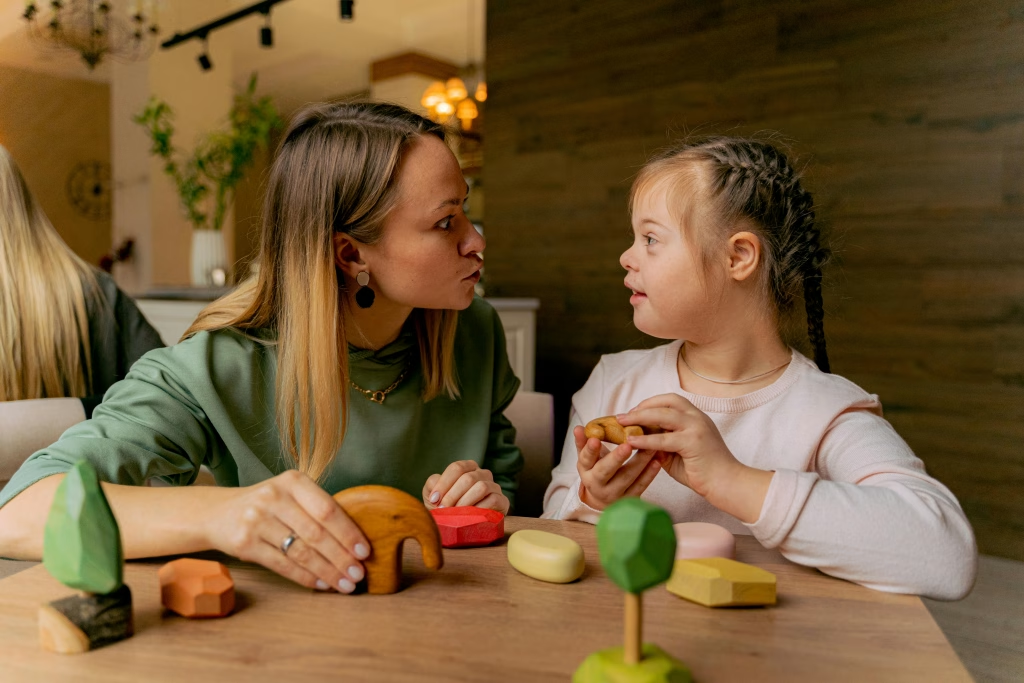
Parents are the most crucial component of a child’s development. In home ABA services promote active parent participation rather than mere observation.
Therapists teach parents to:
- Encourage and reinforce behaviors
- Support communication attempts
- Effectively organize routines
- Calmly respond to challenging behaviors
Encourage independence
In this manner, parents feel empowered. They are no longer uncertain about what to do for their child since they possess strategies that always work.
Parents and children will eventually be empowered to continue their progress even when they are not in a therapy session.
Reduced Stress and Increased Comfort
Going to therapy sessions can be draining for parents and children. The long drive to the therapy session, waiting in the waiting room, and the unfamiliar setting cause them to be resistant or anxious even before the therapy session starts.
In home ABA services eliminate all these issues. Children are in a comfortable and familiar setting with people they trust, making them more receptive to learning.
Advantages include:
- Fewer interruptions in their schedules
- More energy for learning
- Less emotional resistance
- Better focus during therapy sessions
Children are comfortable, so they are more engaged, and engagement leads to positive outcomes.
Personalized and Flexible Programs
Every child is a different learner. A program that works well for all children may not work well for them. In home ABA servicess enable therapists to create personalized learning programs for children based on real-life observation in the home environment.
Therapists can observe:
- Family routines
- Daily challenges
- Favorite activities
- Natural motivators
This enables the learning program to be tailored to the child’s lifestyle, and not a generic program.
For instance, if the child enjoys assisting in the kitchen, learning can be done in the kitchen. If they enjoy playing outside, learning can be done in the backyard. This enables the learning program to be interesting and relevant to the child.
Improved Communication Skills
Communication skills can be developed in a natural manner by practicing with real-life conversation partners. Home-Based ABA Services enable interaction with siblings, parents, and caregivers, and not only with therapists.
Children learn to:
- Request needs
- Respond to questions
- Share attention
- Participate in conversations
- Understand social expectations
Since this is done in a natural manner throughout the day, communication becomes functional, and not scripted.
Better Behavior Support
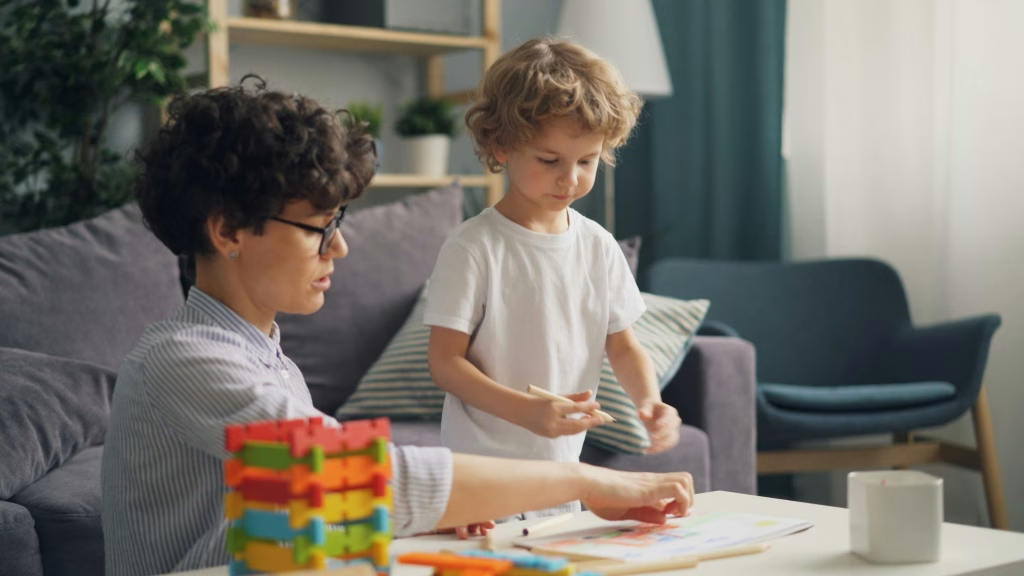
Problem behaviors occur mostly at home, during activities like bedtime, homework, mealtime, and transitions. Clinic-based programs cannot possibly monitor these events.
With in home ABA services, professionals can monitor these events and find ways to support them.
This makes it possible to:
- Implement strategies for intervention immediately
- Implement strategies for prevention
- Implement strategies for environmental change
- Have consistent responses from caregivers
In this way, the family will have a seamless daily life with fewer interruptions.
Improved Independence in Daily Living
Daily living skills are best taught in the setting in which they are to be used. Instead of simulated practice, children practice by doing.
In home ABA therapy promote independence in:
- Dressing
- Eating
- Personal hygiene habits
- Organizing personal belongings
- Performing simple chores
Each step leads to greater confidence. Children will rely less on others and more on themselves.
Building a Strong Family Bond
With improved habits and communication, the stress level in the family reduces. In home ABA therapy lead to fewer arguments and more happy times spent together.
Parents will notice:
- More pleasant meal times
- Easy transitions
- Improved sibling relationships
- Increased involvement in family activities
Families start to concentrate on their strengths rather than their weaknesses.
Consistency Among Caregivers
In most situations, more than one caregiver is involved in the upbringing of the child. This includes parents, grandparents, or babysitters. Without consistency, the development of the child will come to a complete halt.
In home ABA therapy ensure consistency among all caregivers. The child will know what to expect from all caregivers because all caregivers will be trained together by the therapists.
Consistency brings stability, and stability brings learning.

Long-Term Confidence Builder for Parents
The best part about in home ABA services is the confidence that parents will gain. They will have a lifetime of advice, not just a Band-Aid solution.
They will learn to:
- Teach independently new skills
- Manage behavior calmly
- Adjust strategies based on the child’s progress
- Foster learning through daily activities
Families will no longer need experts for development.
In home ABA services: Conclusion
In home ABA therapy bring learning opportunities even in the midst of daily life. In this way, children learn how to apply the skills they have learned. On the other hand, parents learn ways on how to boost their confidence and reduce stress.
The home is no longer a home but a learning place that is full of opportunities. Indeed, with individualized attention and participation of family members, progress seems within reach.
In home ABA services are more than a therapy for many families. They are a way to independence, easier living, and better relationships.